Tech stack
Overview
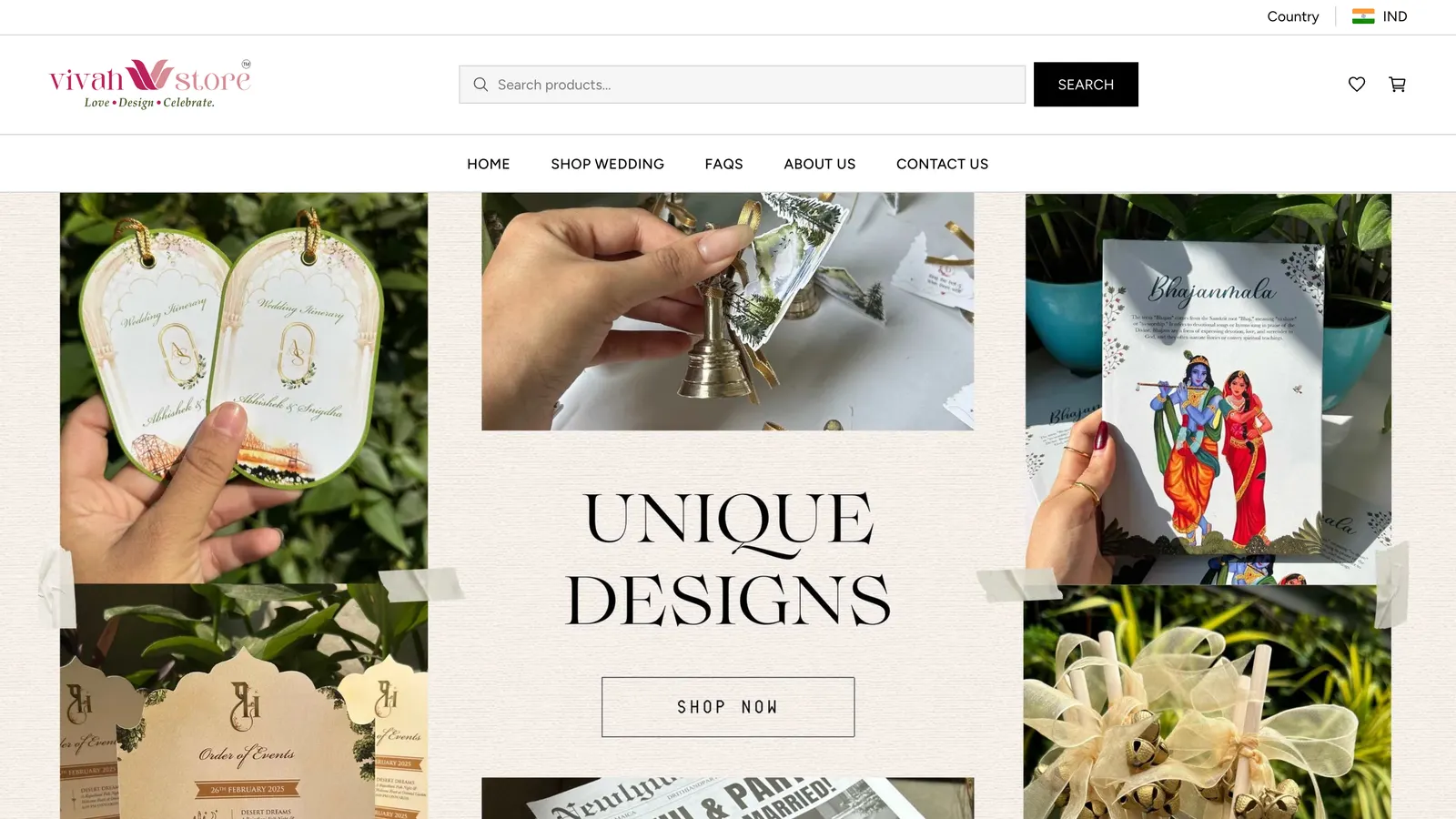
Vivah Store is a wedding retailer that needed to exist online. Customers were searching for them, asking friends for a link, and finding nothing to look at. The obvious answer was an ecommerce site, and it was the wrong one for this business.
Full ecommerce is not just a build cost. It is a payment gateway with its own fees and paperwork, inventory that has to be kept accurate or customers get sold things that are not in stock, order management, shipping logic, returns, and someone whose job it is to watch all of it. The client did not want to spend on that, and for the way they actually sell, they did not need to.
So we built the shopfront and skipped the machinery, routing every order and enquiry into WhatsApp instead.
Why WhatsApp Was The Right Answer
Wedding retail is a conversation, not a checkout. Customers ask whether something comes in another colour, whether it can be altered in time, what the price is for a set rather than a single piece, whether it can be ready before a date that cannot move. Those questions get answered by a person, and the sale closes in that exchange.
The shop was already having those conversations on WhatsApp every day. It is where their customers already are, it costs nothing, it needs no training, and it leaves the shop owner in control of pricing and negotiation, which matters in a category where almost nothing sells at a fixed listed price.
A checkout button would have interrupted that flow rather than serving it. It would have taken payment for items that need a fitting, a discussion, or a date confirmation before anyone should be paying for anything.
What We Built
A catalogue-first storefront where every product is a browsable, shareable page, and every call to action opens WhatsApp with the conversation already started.
The product enquiry flow. Tapping enquire on a product opens WhatsApp with a message pre-filled identifying exactly which item the customer is asking about. The customer does not have to describe what they saw, and the shop does not have to play twenty questions to work out which piece is meant. That single detail is most of the value of the whole approach.
A catalogue built for browsing, not converting. Collections are organised the way the shop organises them, with photography given room to carry the product. In this category people buy with their eyes, so image presentation was the priority over feature density.
Mobile first, because it is entirely a phone experience. The customer is on a phone, they leave to WhatsApp on that phone, and they come back to the site on the same phone. Any friction in that handoff loses the enquiry.
No accounts, no cart, no checkout. Nothing stands between seeing a product and asking about it. There is no sign-up wall, and nothing to abandon.
Trade-offs We Were Explicit About
This approach has real limits and we set them out before building rather than after.
Orders are not tracked by the system, because there is no system: the record of a sale is the WhatsApp thread. That works at the volume this shop does and stops working at some larger scale. There is no automated stock count, so the catalogue reflects what the shop chooses to show rather than live availability. And enquiry volume is bounded by how many conversations a person can hold in a day.
Every one of those is a reasonable trade at this size, and each has a clear upgrade path if the business outgrows it. The site is a catalogue with a messaging layer, so adding a cart and gateway later does not mean starting again.
Learnings
The right amount of technology is the least that solves the problem. It would have been easy, and more profitable in the short term, to sell this client a full ecommerce build. It would also have handed them running costs and operational work that their sales process does not need, to automate a step that a two-minute conversation already handles better.
Meeting customers where they already are beats moving them somewhere new. No adoption, no onboarding, no explaining: the customer taps a button and lands in an app they already have open all day.
For small retailers, online presence and online checkout are separate decisions that get bundled together too often. Plenty of businesses need the first urgently and the second not at all, and treating them as one purchase prices those businesses out of having a website in the first place.
Related case studies
Digital Ecommerce Store
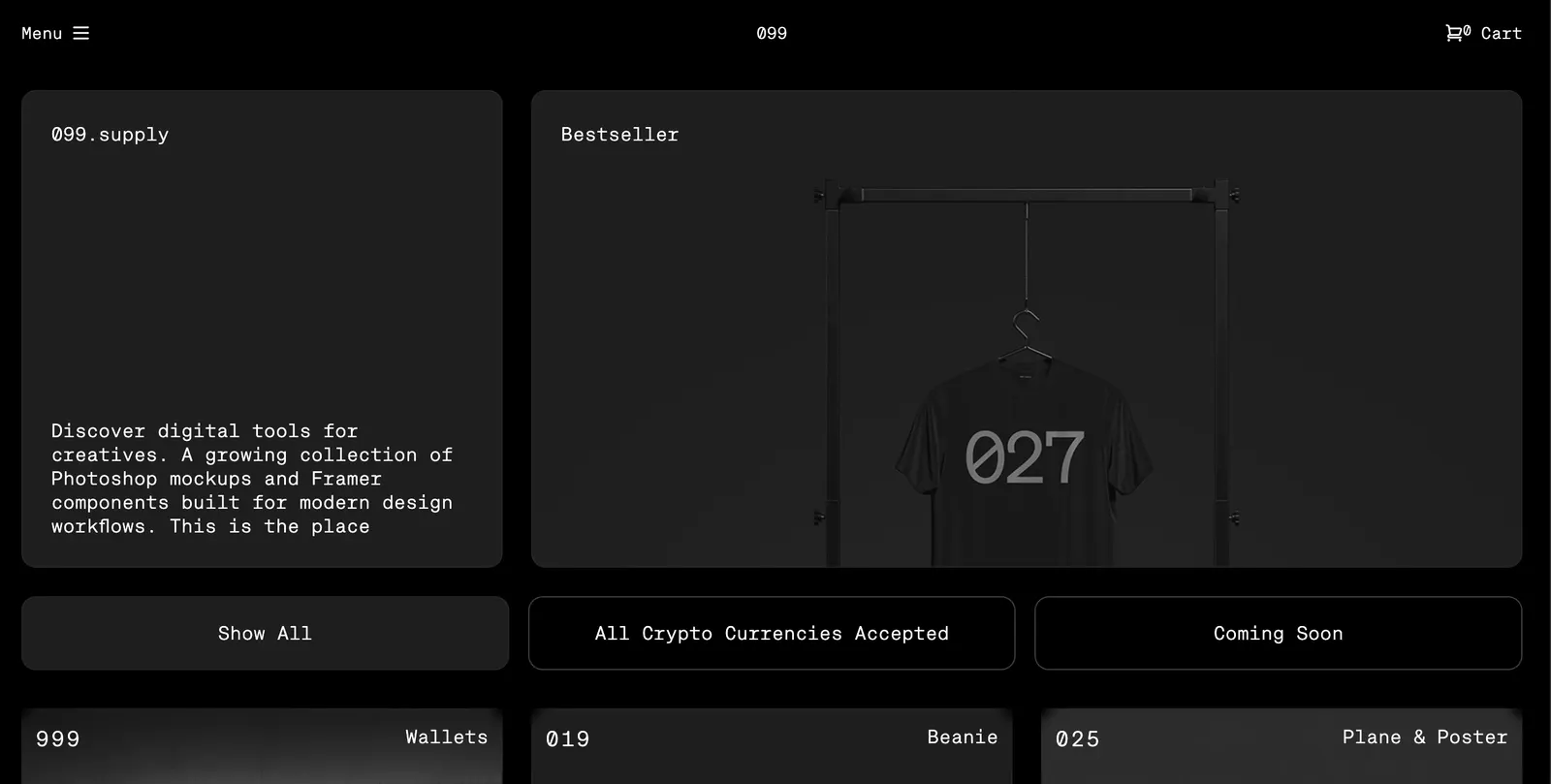
A fullstack digital ecommerce store created to sell digital products. Customers can buy digital products and pay using crypto currency they like.
Easy Appoint
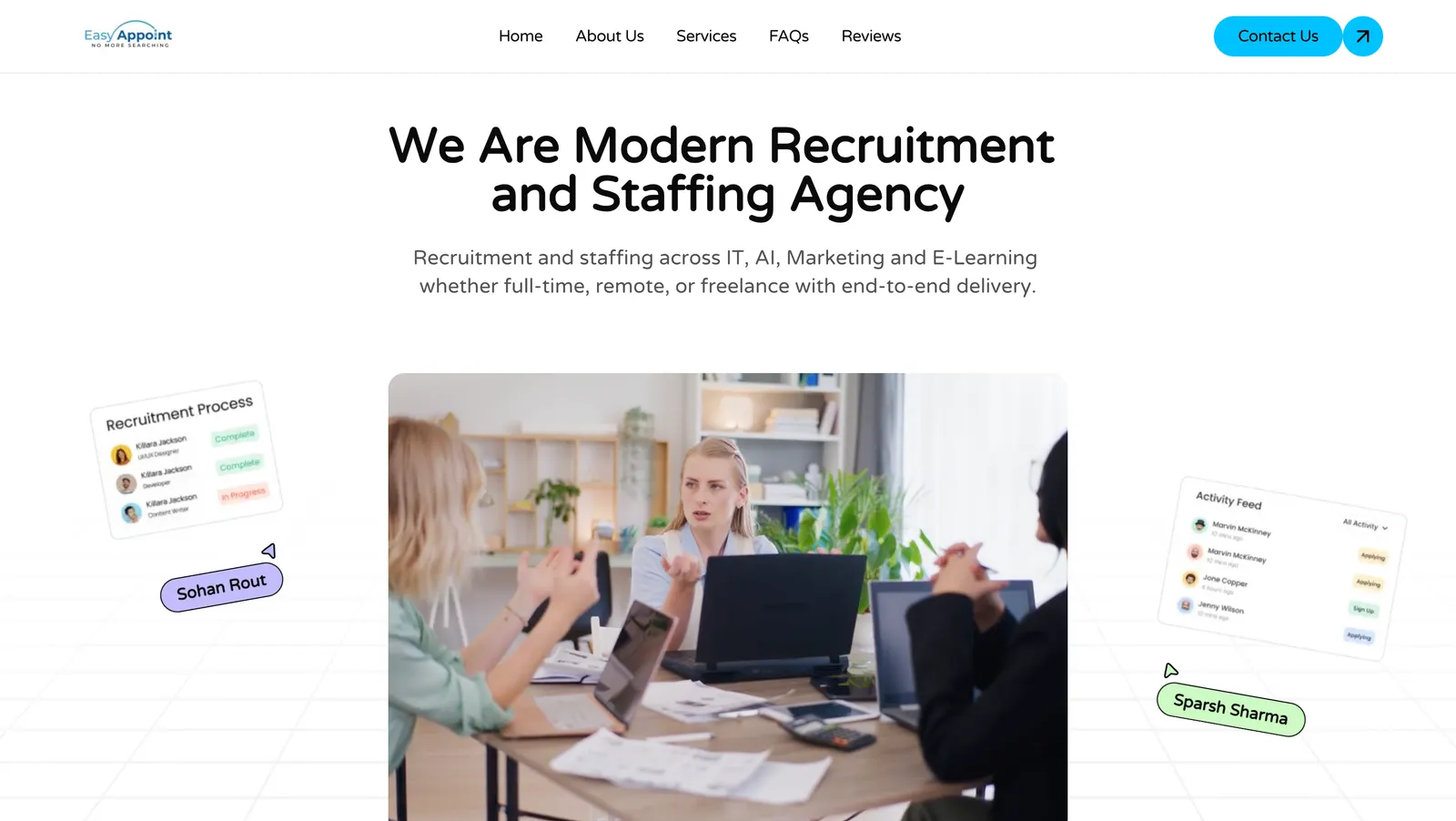
A lead generation website for a modern recruitment and staffing agency hiring across IT, AI, Marketing and E-Learning. The site is built around a single job, turning agency traffic into qualified inbound enquiries, with a conversion-focused page structure, trust-building social proof, and a contact flow that stays one click away from every section.